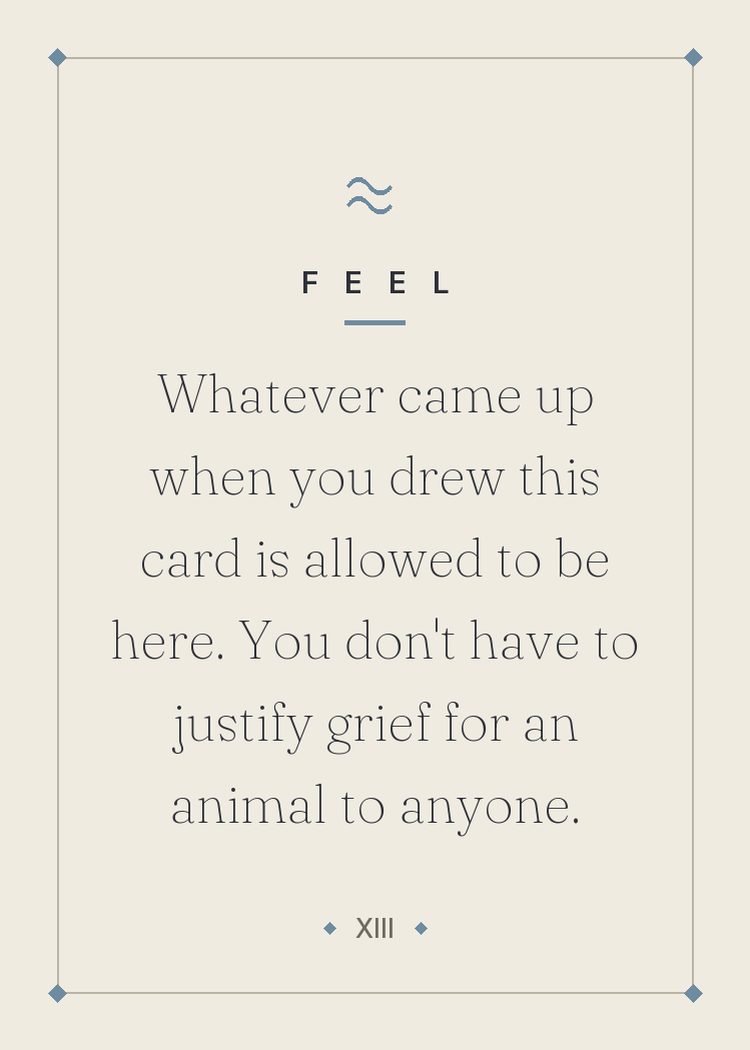
FEEL · XIII
You'll meet people who understand instantly and people who never will. The second group doesn't hold a veto.
Voices — this card, in use
Teaching vignettes: illustrative voices showing the practice applied. The living candle wall grows below.
A coworker said 'it's not like it was a person.' I went home and cried harder about that than the day itself. Then I wrote 'my grief needs no defense' on a sticky note. Sticky note won.
The vet tech hugged me and said 'this is real grief, you know.' A stranger gave me the permission my own family fumbled. Now I give myself the permission first and let everyone else catch up.
Whatever is coming up
This room is open every time — tonight, the anniversary, years from now. What's here right now?
The practice
Write the sentence once where the doubt tends to find you — a phone note, a mirror: 'This grief needs no defense.' Read it when billed.
When it's yours
If it's early daysThe invalidations arrive earliest — 'it was just,' 'you can get another.' Pre-writing your one sentence beats improvising through tears.
If it's been a long timeYears later, embarrassment can creep in — 'still, over a cat?' Still. The bond was daily for years; the timeline answers to that.
If the ending was hardA hard ending plus a dismissive world is a double disenfranchisement. You get to grieve both the loss and the loneliness of it — no defense owed for either.
Sit with this
Whose approval have you been unconsciously waiting for — and what would you do differently the moment you stopped?
Grief literacy
Term to know: Disenfranchised grief, answered — validation starts at home. Yours counts because it exists.
If this card holds you
This room doesn't expire. Grief isn't a one-time event — anniversaries, ambushes, the good years, the hard ones — and the card in your hand is a permanent key. Come back for whatever is coming up.
This card lives in the deck — 52 companions, on a nightstand near the people you love. Buy the physical deck — $35.00 · free US shipping