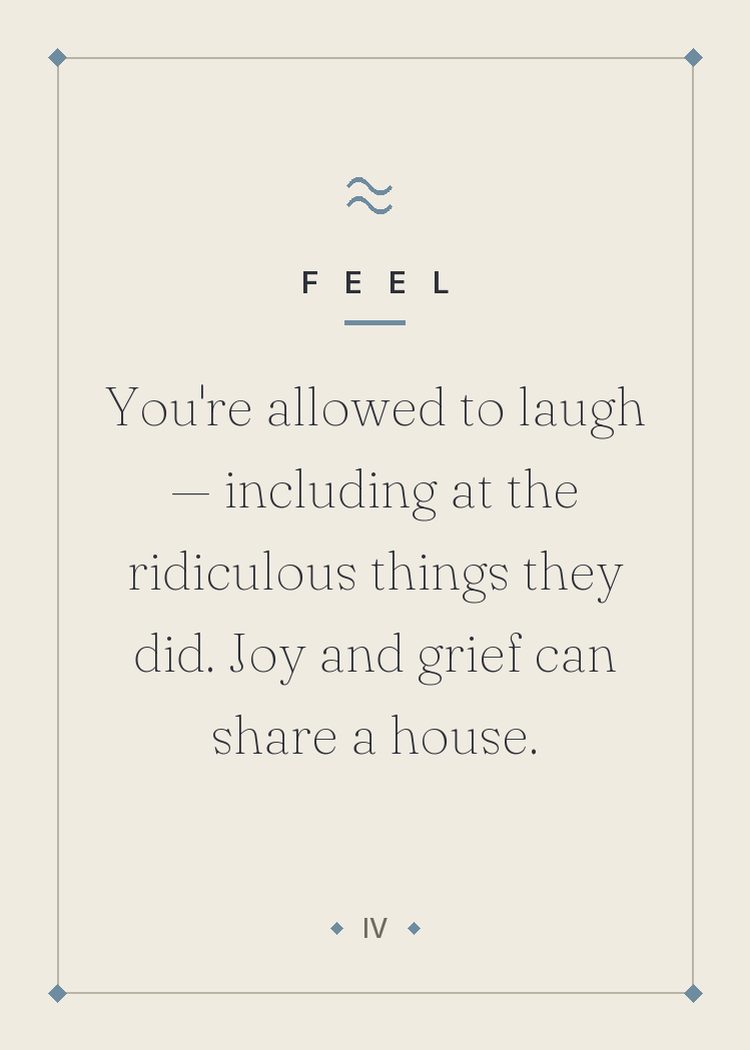

FEEL · IV
Bonanno and Keltner's bereavement studies found genuine laughter during grief predicts better adjustment — and pet grief is unusually rich in comic material, because animals were unusually ridiculous. Laughing at what they used to do is not betrayal; it's retrieval. The memory system that surfaces their absurdity is the same one keeping them. Humor is them, still working — still doing the job they always did in your chest.
Voices — this card, in use
Teaching vignettes: illustrative voices showing the practice applied. The living candle wall grows below.
Keisha — 'laughed till I cried about the time Waffles stole an entire rotisserie chicken. it felt like him, visiting. still working.'
Em — 'first laugh, instant guilt. then I learned laughter predicts healing. now when her ridiculous photos get me, I figure she landed one.'
Whatever is coming up
This room is open every time — tonight, the anniversary, years from now. What's here right now?
The practice
Tell the most ridiculous story about them today — the stolen chicken, the vendetta against the vacuum. Laugh fully. That's retrieval, not betrayal; they were, objectively, hilarious.
When it's yours
If it's early daysThe first laugh after a pet dies usually arrives fast — they were funny — and drags guilt behind it. Cut the guilt loose.
If it's been a long timeEventually the funny memories run the archive. That's proportion returning: they spent years being absurd on purpose.
If the ending was hardEven a hard ending doesn't get to own the whole story. The comedy years outvote the last day. Let them.
Sit with this
What did they do that no one who didn't know them would believe — and who needs to hear it this week?
Grief literacy
Term to know: Positive emotion in bereavement — genuine laughter predicts adjustment. It's them, still working.
If this card holds you
This room doesn't expire. Grief isn't a one-time event — anniversaries, ambushes, the good years, the hard ones — and the card in your hand is a permanent key. Come back for whatever is coming up.
This card lives in the deck — 52 companions, on a nightstand near the people you love. Buy the physical deck — $35.00 · free US shipping