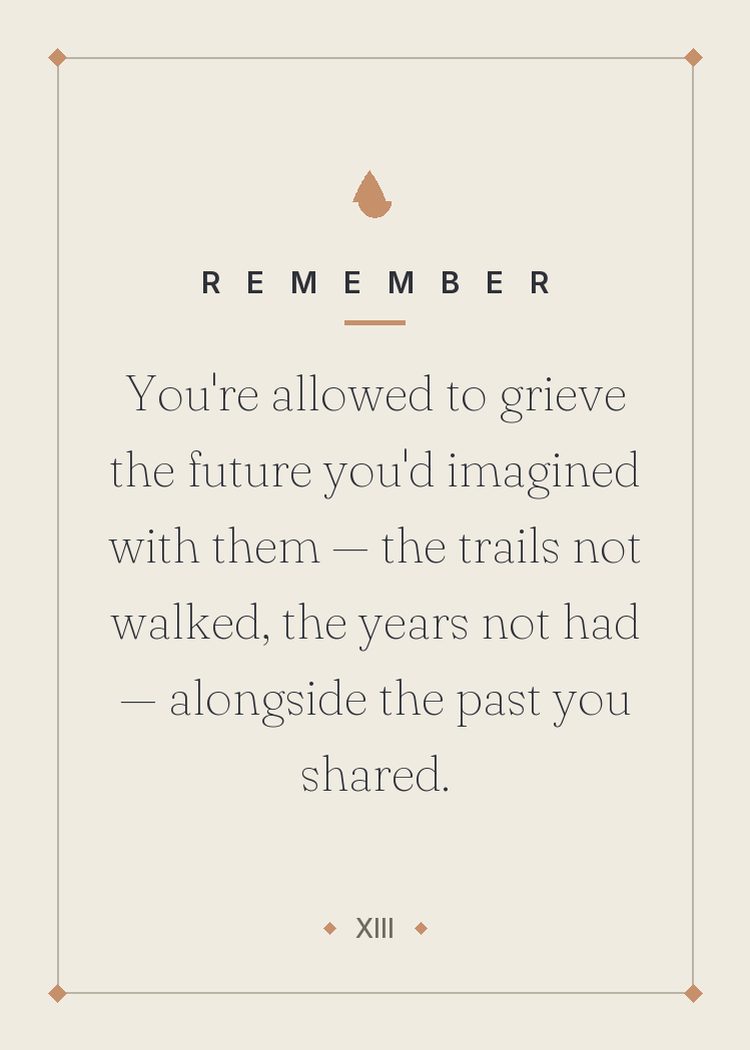
REMEMBER · XIII
Grief research calls it anticipated-future loss: the timeline that ended mid-sentence. It deserves its own naming, not a footnote.
Voices — this card, in use
Teaching vignettes: illustrative voices showing the practice applied. The living candle wall grows below.
We'd planned to drive her to the coast when I retired. I retired in March; she died in January. I drove the route anyway with the window down. Told her the whole way what she was missing.
I grieved the puppy years I got and the old-dog years I didn't. My husband thought that was strange until I said 'I already loved eleven-year-old her.' Then he got quiet and nodded.
Whatever is coming up
This room is open every time — tonight, the anniversary, years from now. What's here right now?
The practice
Name one specific imagined future — aloud, or on paper: 'We were going to ___.' Let the sentence finish. Let it count.
When it's yours
If it's early daysEarly on, the futures collapse all at once — every plan detonating on its scheduled date. Naming them as they surface defuses the ambush.
If it's been a long timeMilestones resurrect the imagined years — the move they'd have loved, the kid they never met. Old futures visiting isn't backsliding; it's the calendar doing its work.
If the ending was hardIf the ending came mid-plan — the trip booked, the treatment scheduled — grieve the plan by name too. Cut futures ache differently than completed ones.
Sit with this
What were you most looking forward to with them — the specific thing — and who else knows that was on the calendar?
Grief literacy
Term to know: The imagined years — mourning includes the future you'd planned. Naming it honors both timelines.
If this card holds you
This room doesn't expire. Grief isn't a one-time event — anniversaries, ambushes, the good years, the hard ones — and the card in your hand is a permanent key. Come back for whatever is coming up.
This card lives in the deck — 52 companions, on a nightstand near the people you love. Buy the physical deck — $35.00 · free US shipping